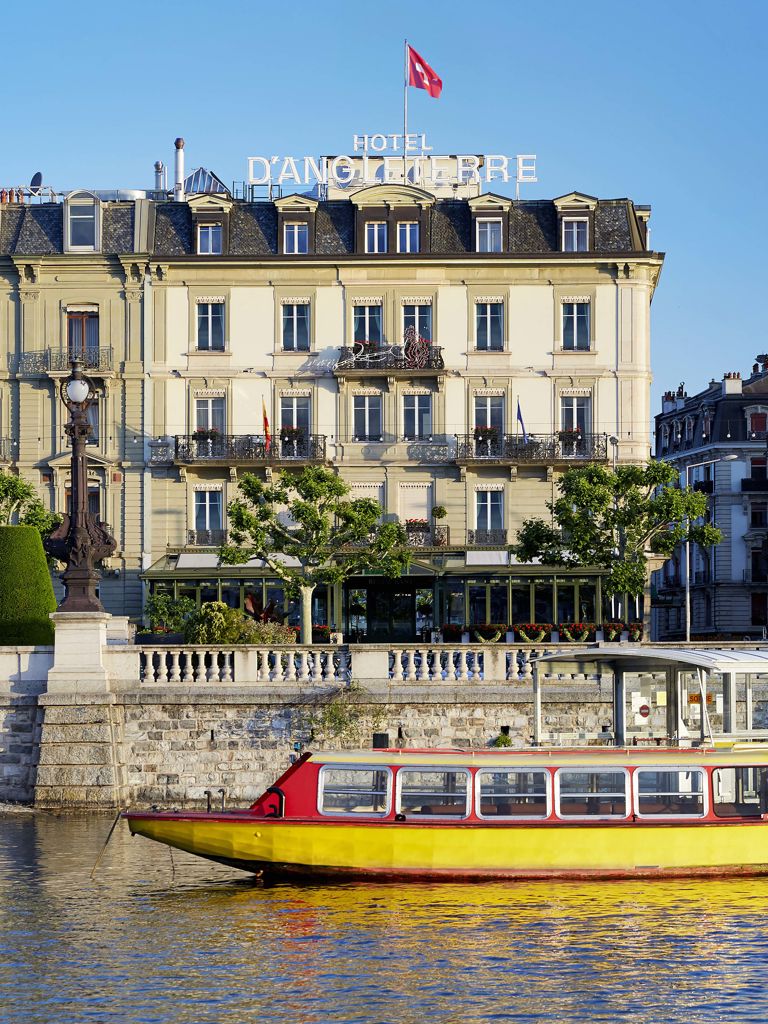
The History of 'Angleterre'
Every name tells a story, and here at Hotel d'Angleterre in Geneva, ours is no different.
Every name tells a story, and here at Hotel d'Angleterre in Geneva, ours is no different.
Discerning travellers will have noted that continental Europe is full of hotels bearing the term ‘Angleterre’ – the French word for ‘England’ – in their names. This is a trend that began across the continent during the 18th and 19th centuries, and was no accident, but rather a deliberate marketing strategy. The name signalled to travellers – especially those from the British aristocracy – a promise of familiar comforts, refined service, and cultural prestige.
In that era, the Grand Tour, and later rail-powered leisure travel, created a sizeable stream of English visitors seeking hospitality that mirrored the etiquette and elegance of home. The use of ‘Angleterre’ in hotel names played on that expectation, acting as an enticement to the wealthy and status-conscious traveller by invoking associations with British refinement. Built in 1872, it was within this historical context that Hotel d’Angleterre emerged.
Positioned gracefully along the Quai du Mont-Blanc, with sweeping views of Lake Léman and the Alps, its name aligned it with a tradition of exclusivity. By choosing ‘Angleterre’ as its moniker, the hotel implicitly offered English-speaking guests a scent of home: afternoon tea, courteous service, and décor suggesting genteel familiarity – all wrapped in Swiss elegance. Designed by the noted architect Anthony Krafft, it was conceived not just as any urban lodging, but as a boutique luxury option for an upper‑class clientele seeking both intimacy and distinction.

While other hotels elsewhere also adopted ‘Angleterre’ – a reflection of the broader trend – Geneva’s own took on a uniquely local resonance. The name embraced a dual identity: it nodded to English tradition while anchoring itself firmly in the sophisticated milieu of Geneva. It became among the city's earliest and most elite lodgings, renowned for its historic façade, elegant staircases, and interiors that blended aristocratic charm with discreet Swiss craftsmanship.
Over time, the hotel underwent expansions and renovations – extensions in the early 20th century, a major interior revamp in 1995 that preserved only the historic façade, staircase, and floors – all demonstrating a commitment to blending modern comfort with heritage. Throughout these transformations, the ‘Angleterre’ name remained integral not as a marketing relic but as a touchstone of identity that continued to attract guests seeking both timeless charm and subtle extravagance.
What sets Geneva’s Hotel d’Angleterre apart is how the ‘England’ motif has been woven into the story without the laboured replication of British clichés. The name conjures expected rituals – such as afternoon tea – but those elements are thoughtfully integrated with the local context. Gourmet haute‑Swiss cuisine, artful interiors, and a hospitality ethos focused on intimacy and personalisation. The branding is not simply a play on nostalgia, but instead a signal that this is a place where tradition, elegance, and unhurried luxury converge.

Elsewhere in continental Europe, the use of ‘Angleterre’ functioned similarly as a French-language nod to England that offered international cachet. Today, many of those establishments no longer remain, or have evolved into modern chains, but Geneva’s Hotel d’Angleterre remains a living example of the enduring power of that naming strategy. It illustrates just how a hotel name’s meaning can maintain its appeal through the ages and continues to define the hotel and its appeal today.
In summary, the use of ‘Angleterre’ in a hotel title once meant more than geography – it meant expectation. It was a signal to the English elite: come, and you will find a semblance of home in service, surroundings, and style. We embraced that signal back in 1872 and take immense pride in having preserved it ever since.
For a truly magical trip, book your stay at Hotel d’Angleterre, located right on the banks of Lake Leman. With its elegant decor, five-star service, and unbeatable location, it’s the perfect base for exploring these historic castles.
Discover more